Cracked sidewalks get people hurt. That’s not opinion – it’s a liability reality that Clearwater homeowners deal with constantly, especially on older properties where roots and settling have turned a flat walkway into an obstacle course. AJ Concrete Contractor is a licensed, fully insured concrete company with years of hands-on sidewalk work across Pinellas County. We remove, replace, and pour new concrete sidewalks that stay level and drain properly in Clearwater’s climate.
Most people never think about their sidewalk until someone trips on it. Then it becomes urgent real fast. A raised edge, a crumbled corner, a section that rocks when you step on it – any of that can send a visitor to the ground and send you to court. We get calls like this every month from Clearwater homeowners who need a fix yesterday.
But sidewalk work isn’t a rush job if you want it done right. The ground underneath has to be prepped. Old roots need to come out. Low spots need fill. You skip those steps and the new concrete is going to do the same thing the old concrete did. Settle, shift, crack. We’ve fixed enough botched sidewalk jobs to know what happens when contractors treat this like simple work. It’s not complicated, but it demands patience.
Here’s how a typical sidewalk job goes when we handle it.
Day one, we sawcut around the sections that need to come out. Clean cuts. No ragged edges spilling into the parts you’re keeping. The old concrete gets broken up, loaded, and hauled off. If tree roots caused the damage, we cut them back far enough that they won’t push up again in three years. Some homeowners get nervous about that. The tree will be fine – we know where to cut and where not to.
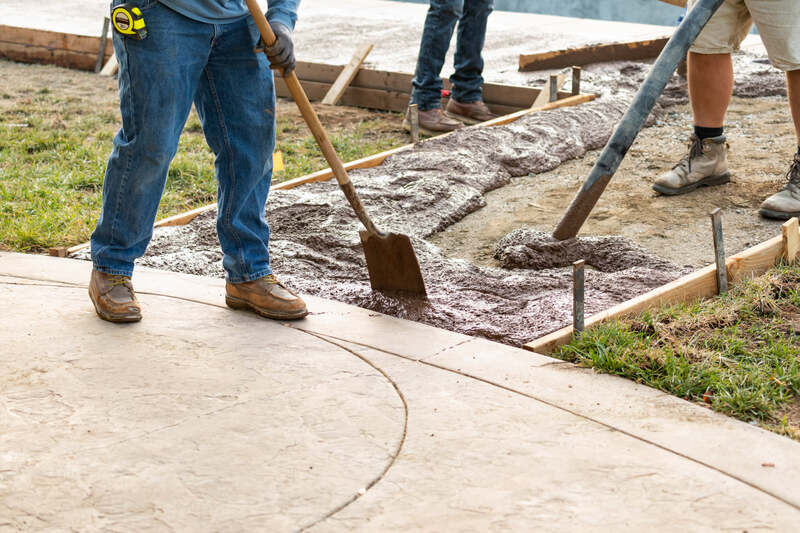
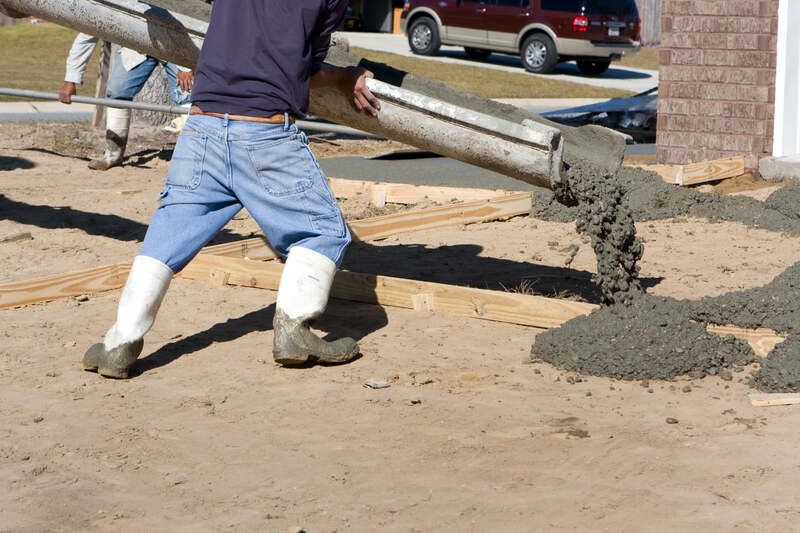
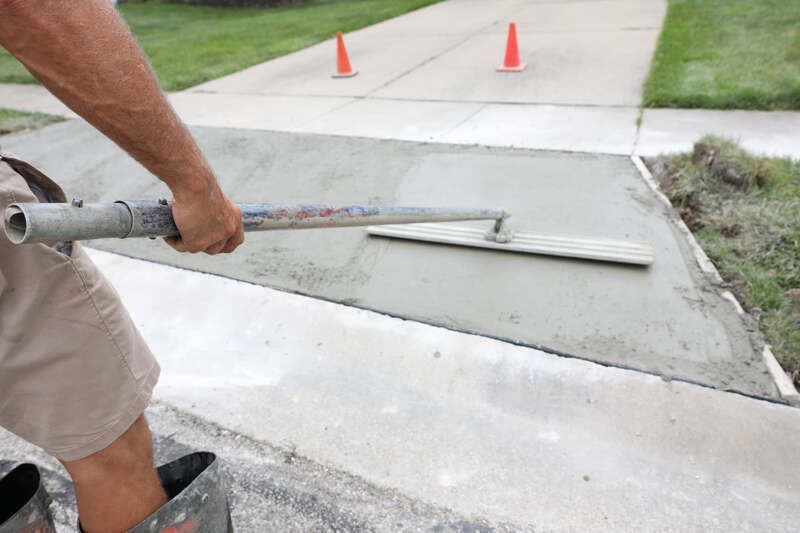
Next comes the base. We fill, grade, and compact. Then forms go in – straight boards pinned tight, set at the right elevation with a slight cross-pitch so water runs off to one side instead of sitting on the surface. Pour day is the fast part. Concrete goes in, our finisher screeds it flat, edges the sides, cuts control joints, and hits it with a broom for grip. Cure time is about five to seven days before you walk on it regularly. Simple process. But every step matters.
Three main reasons sidewalks break down around here. Roots, water, and bad base prep. That’s pretty much the whole list.
Clearwater’s full of live oaks, laurel oaks, and palms with aggressive surface root systems. Those roots don’t care about your sidewalk. They grow underneath, lift one side of a slab panel, and crack it right down the middle. We see this constantly in older neighborhoods near Downtown and along streets like Druid Road and Palmetto.
Then there’s water. The sandy soil in Pinellas County erodes underneath slabs when drainage isn’t managed. A gutter dumps runoff right onto the sidewalk edge, washes out the base material over a couple of rainy seasons, and now you’ve got a slab with nothing supporting it on one side. It breaks. Every time.
Third one is just lazy installation. Contractor doesn’t compact the base, pours on loose fill, and walks away. Looks great for about eight months. After that, gravity does what gravity does.
Residential sidewalks in Clearwater typically go in at 4 inches thick over a compacted base. That’s standard. For areas where vehicles might cross – like a sidewalk that bridges a driveway apron – we bump it to 6 inches with rebar or wire mesh for reinforcement.
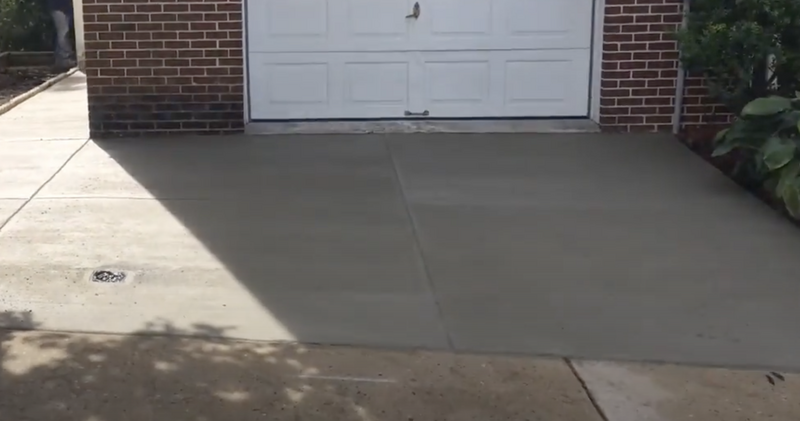
Control joints get scored every 4 to 5 feet. This is the part most DIY attempts mess up. Joints have to be cut deep enough – a quarter of the slab thickness at minimum – or the concrete ignores them and cracks wherever it feels like. We use a groover right after the pour while the surface is still workable, then come back with a saw if needed once it firms up.
Width depends on your lot and your preference. 3 feet is the minimum most people go with. 4 feet gives you room for two people to walk side by side. We’ll match whatever your existing walkway width is if you’re replacing a section rather than pouring fresh.
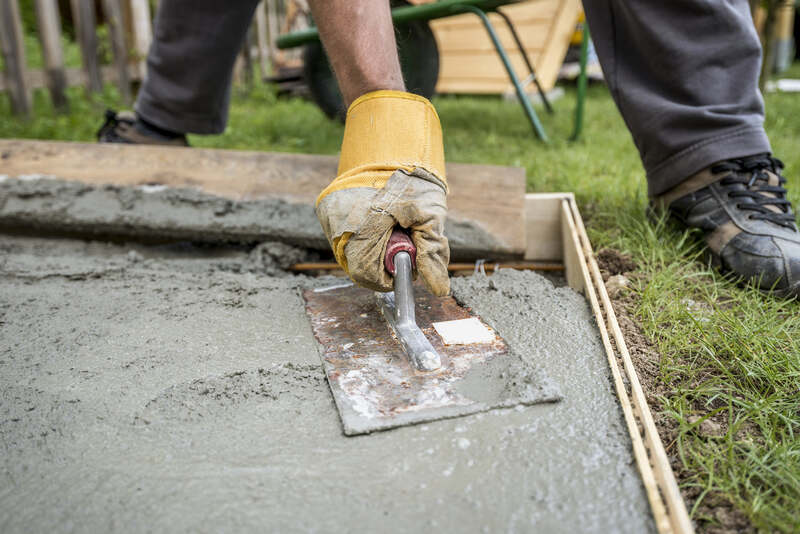
Not every job needs a complete tear-out. If you’ve got one or two panels that heaved and the rest is still flat, replacing just those sections makes sense. We match the thickness, the finish, and the joint pattern so the new panels blend in with the existing ones. Color will be slightly different at first because fresh concrete is lighter. Evens out over a few months.
Full replacements make more sense when the majority of your walkway has settled or cracked. At that point, you’re spending almost as much patching individual pieces as you would tearing the whole thing out and starting clean. We’ll walk your property with you and point out which panels are fine, which ones are borderline, and which ones absolutely need to go. No guesswork. You decide how far you want to take it based on real information.
Some sidewalk problems don’t require a full replacement. A panel that’s sunk half an inch below its neighbor can sometimes be mudjacked or foam-leveled back into position. Trip hazard gone. Fraction of the cost of demo and repour.
Other times, surface damage is the issue. Spalling, scaling, pitting – the top layer deteriorates but the slab itself is still solid underneath. An overlay or skim coat can bring it back if the base hasn’t failed. Costs less, takes less time, and you’re walking on it again within a couple days.
We assess each situation individually. Repair, level, resurface, or replace – the right answer depends on what’s actually wrong with the concrete, not what generates the biggest invoice. AJ Concrete Contractor has been handling sidewalk repairs across Clearwater long enough to know which fix actually sticks and which ones are just temporary.
Sidewalks might not be the most exciting part of a house, but they’re one of the first things people notice when they walk up to your front door. A clean, level sidewalk tells visitors the property is cared for. A buckled, mossy one tells them something different.
Insurance companies notice too. A trip-and-fall claim on your property can cost you thousands, and your carrier might not be thrilled about renewing you if the sidewalk was obviously in bad shape when the incident happened. Pouring a new concrete sidewalk or fixing the broken one you’ve got now is a small expense compared to that headache. Think of it as protecting your property, your wallet, and your peace of mind all at once.
We’ve poured sidewalks in just about every Clearwater neighborhood you can name at this point. The older blocks south of Court Street. The subdivisions up near Countryside. The waterfront properties off Island Estates. Townhome complexes along US-19. Each area’s got slightly different soil, different tree situations, different existing infrastructure to work around.
That kind of local familiarity counts for a lot. A contractor driving in from Orlando or Tampa doesn’t know that the lots near Stevenson Creek have a high water table that affects base prep. Or that the city requires specific right-of-way setbacks for sidewalks near certain streets. We know because we’ve dealt with it on actual jobs, not because we read about it.
Concrete sidewalks are low maintenance. That’s the whole appeal. But low maintenance isn’t zero maintenance.
Pressure wash it once a year. Maybe twice if you’ve got heavy tree cover dropping leaves and pollen onto the surface. Mildew grows fast in Clearwater’s humidity and it’ll turn your walkway black-green if you ignore it long enough. A basic pressure rinse and maybe some diluted bleach handles that in an hour.
Watch for cracks that form outside the control joints. Small hairline ones aren’t usually a concern. But if a crack starts widening or one side of a panel lifts higher than the other, that’s the base shifting underneath and it needs attention before it gets worse. Call us early and the fix is usually minor. Wait a year and you’re looking at a tear-out.
Flat, level, and properly jointed. That’s what a sidewalk should be. Nothing fancy about it. But getting those three things right in Clearwater’s sandy, root-heavy, rain-soaked ground takes actual skill and local experience.
AJ Concrete Contractor has both. Our crew has been pouring, repairing, and replacing concrete sidewalks across Clearwater and the surrounding cities for years. Largo, Dunedin, Palm Harbor, Safety Harbor – we cover the whole area. Give us a call at (727) 758-3748 if your sidewalk needs work. We’ll come take a look, give you an honest opinion, and quote the job same day in most cases.
Word of mouth built this company. Clearwater homeowners refer us because the sidewalk we poured three years ago still looks new.
Base compaction, root removal, correct grading. We don’t cut steps that determine whether the slab survives or fails.
Straight edges, smooth finish, swept site. When we pull off your property, the only sign we were there is fresh concrete.
Problem after the pour? Pick up the phone. We come back and handle it.
Tripping hazard in your front yard? Old walkway crumbling along the edges? AJ Concrete Contractor tears out the bad stuff, preps the ground right, and pours sidewalks built for Clearwater’s soil and weather. Call for a free look.