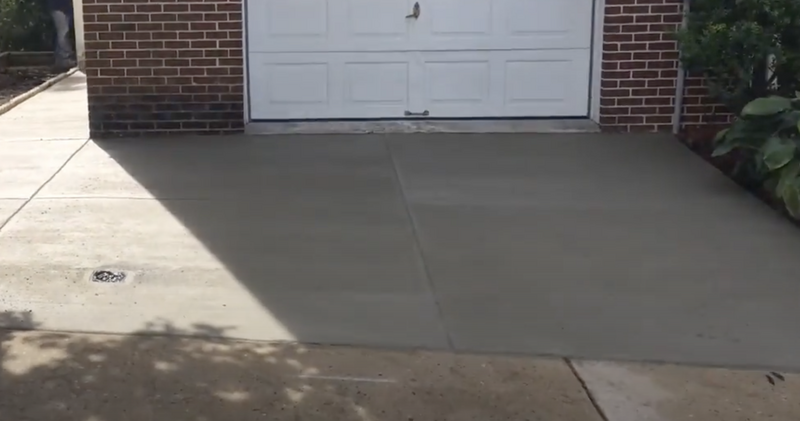
Your parking lot talks before your business does. Customers pull in, see cracks and potholes everywhere, and they’ve already made a judgment before walking through the front door. AJ Concrete Contractor pours concrete parking lots for commercial properties across Clearwater – retail, office, restaurant, industrial. Our crew has been building and replacing lots in Pinellas County long enough to know what holds up under real Florida traffic and what falls apart in two years.
This question comes up on every commercial job. Owner says their last lot was asphalt and it needed patching every other year. Should they go concrete this time?
Short answer – yes. Longer answer – here’s why.
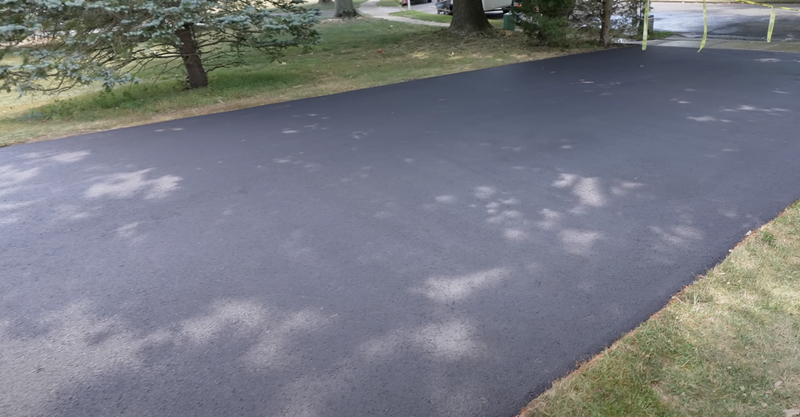
Asphalt is cheaper to install. Nobody’s arguing that. But Clearwater sits in direct subtropical sun roughly 250 days a year. That UV and heat softens asphalt. Ruts form under heavy vehicles. The surface gets sticky in peak summer. Oil stains soak in permanently. And you’re resealing the whole thing every two to three years or it oxidizes and crumbles.
Concrete costs more upfront. But it reflects heat instead of absorbing it – your lot surface temperature drops 15 to 20 degrees compared to blacktop on a summer afternoon. It doesn’t rut. It doesn’t soften. Oil stains sit on the surface and can be cleaned off. And the lifespan is 25 to 30 years with minimal maintenance versus 10 to 15 for asphalt before major repairs kick in.
Over a 20-year window, concrete is cheaper. We’ve had Clearwater business owners do the math themselves and come to the same conclusion. The initial cost stings, but the long game favors concrete heavily.
Parking lots look simple. Big flat rectangle, right? Not quite.
The engineering underneath drives everything. Traffic flow patterns determine where the heaviest loads concentrate – turning lanes, stop-and-go areas near entrances, dumpster truck routes. Those zones get thicker concrete and heavier reinforcement than the general parking field because they take more abuse.
Our process starts with a site survey. Existing grade, soil conditions, drainage flow, utility locations, and access points for concrete trucks. Then we design the layout – lane widths, stall dimensions, ADA accessible spaces and routes, fire lane clearances. All of it has to meet Clearwater’s municipal code and ADA federal standards simultaneously.
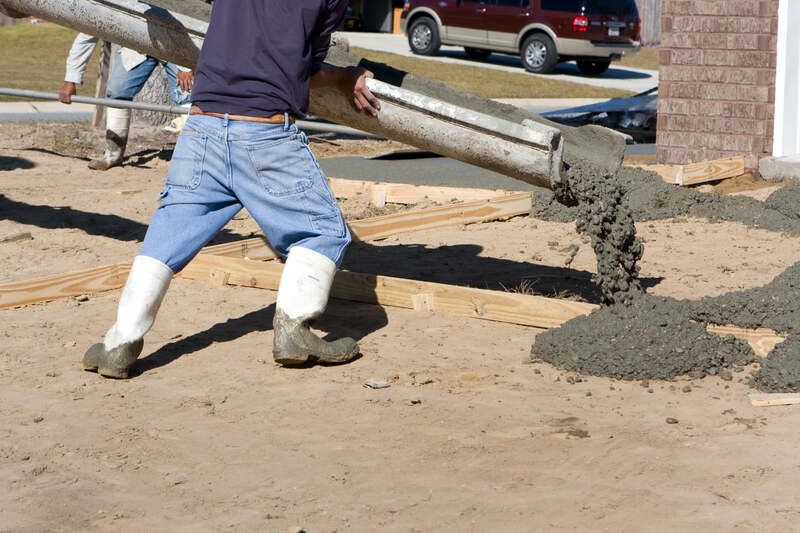
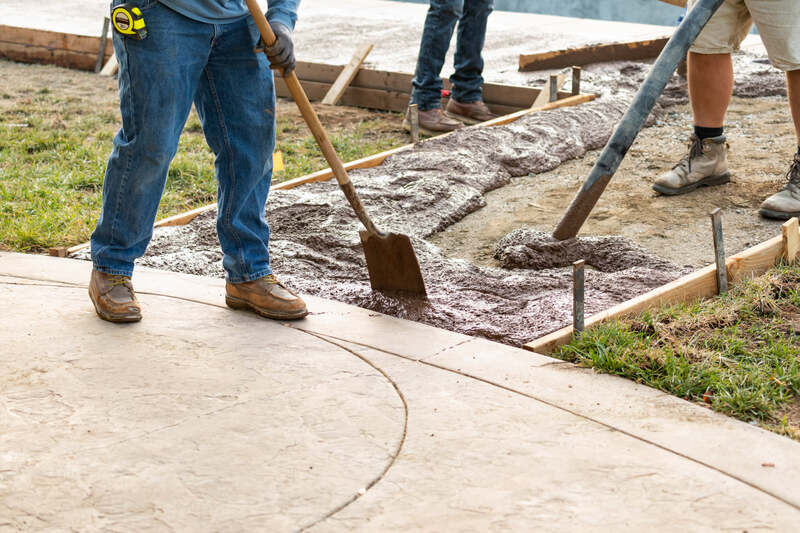
Subgrade prep follows. Strip the old surface if there is one. Excavate to design depth. Compact the native soil. Bring in aggregate base and compact that in lifts. Moisture barrier where needed. Then formwork, rebar placement, pour, finish. On a standard commercial lot, we’re pouring 6 inches thick minimum with #4 rebar on 18-inch centers both directions. Heavier in drive lanes and truck routes.
This isn’t optional. Getting it wrong gets expensive.
ADA requires a specific number of accessible parking spaces based on total lot capacity. One accessible space for every 25 standard spaces up to 100, then the ratio changes. At least one van-accessible space with an 8-foot access aisle. Accessible routes from those spaces to the building entrance with proper slope – 2% maximum cross slope on the route, 5% max running slope on ramps.
Signage, pavement markings, and detectible warning surfaces at curb ramps all have dimensional requirements too. The vertical clearance for van-accessible spaces needs a sign mounted at the right height. Faded paint or a missing sign can trigger an ADA complaint, and those complaints come with real legal consequences.
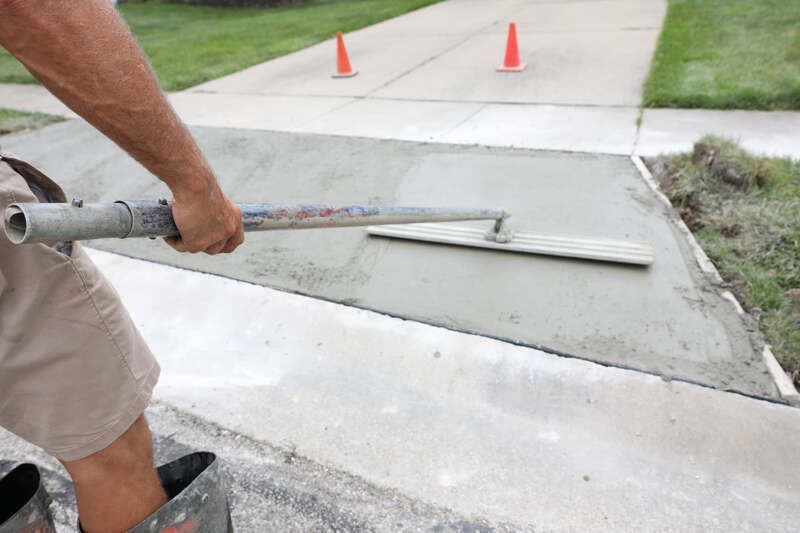
We pour our lots with ADA built into the design from the start. Accessible spaces are located on the flattest, most direct route to the entrance. The slopes are checked with a digital level during finishing. Curb ramp locations are formed precisely so the detectable warning panels fit flush. Retrofitting ADA compliance into an existing lot that wasn’t designed for it costs three times what building it correctly the first time does.
Rain hits a parking lot and suddenly you’ve got a lake blocking the entrance. That’s a drainage failure.
Clearwater’s summer storms drop serious water in short bursts. A 5,000-square-foot parking lot collects roughly 3,100 gallons during one inch of rainfall. That volume needs to move off the surface, into a collection system, and away from the building within minutes – not hours.
We engineer surface grades to direct water toward catch basins, trench drains, or permeable edges. The concrete surface itself slopes at a minimum of 1% toward drainage points. On larger lots, we create subtle valleys between parking rows that channel water toward drains at the low points.
Catch basins tie into the stormwater system – either a municipal connection or an on-site retention area depending on Clearwater’s requirements for the property. Pinellas County has stormwater management regulations that commercial properties have to meet, especially during new construction or major renovation. We coordinate with civil engineers when needed to make sure the drainage design satisfies both the practical needs and the regulatory requirements.
Concrete cracks. Every concrete contractor knows this. The question is whether it cracks where you want it to or wherever it feels like.
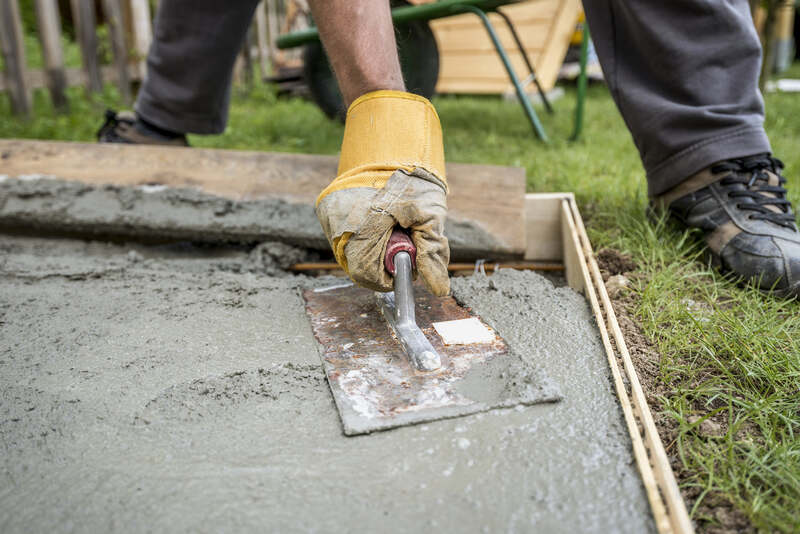
On a parking lot, uncontrolled cracking is ugly, dangerous, and expensive to fix. Cracks collect water, erode the base, and widen over time until the slab breaks into pieces. Control joints prevent that by creating predetermined weak points where the concrete relieves stress in a straight, manageable line instead of a random zigzag across the surface.
Joint spacing on a parking lot follows a rough rule – panels shouldn’t exceed 12 to 15 feet in any direction. On a 6-inch slab, we typically cut joints at 12-foot intervals. The cuts go in within 6 to 18 hours after the pour using an early-entry saw – a lightweight walk-behind unit that cuts a narrow groove before the concrete has fully hardened. Timing matters. Cut too early and the saw ravels the edges. Cut too late and the slab has already cracked on its own terms.
Expansion joints go in at the building interface, around light pole bases, at curb transitions, and anywhere the lot meets another structure. These joints have compressible filler that absorbs thermal expansion without transferring stress between the slab and whatever it’s butting up against.
We pour the lot. Striping is a separate trade and we work with a local striping company that handles the paint and thermoplastic markings after the concrete has cured.
That said – our pour has to be right for the striping to work. Stall widths need to be consistent with the layout plan. Handicap spaces need the correct aisle width formed into the design. Fire lanes need the right clearance. Drive lane arrows need to match the traffic flow pattern. If the concrete is off-spec, the striper can’t fix it with paint.
We provide the striping company with a layout drawing that matches what was poured. They come in, chalk the lines, and lay down thermoplastic or traffic paint. Thermoplastic lasts longer – 3 to 5 years in Clearwater’s sun versus 1 to 2 for paint. Costs more but the longevity pays for itself if you factor in restriping frequency.
Color coding follows standard conventions. White for standard stalls. Blue for accessible spaces. Red or yellow for fire lanes and no-parking zones. Arrows, stop bars, and directional text in white or yellow depending on local requirements.
Full replacement isn’t always necessary. Depends on how much of the lot has failed and what’s causing the damage.
Isolated panel failures – a cracked section here, a settled area there – can be cut out and replaced individually. We sawcut around the damaged panels, demo them, recompact the base, and pour new concrete that matches the existing thickness and finish. The color won’t match perfectly until the new concrete weathers in, but structurally it’ll be solid.
Joint sealant replacement is another common maintenance item. The original sealant in the control joints breaks down after 5 to 7 years, letting water penetrate and erode the base underneath the slab edges. Rout the old sealant out, clean the joint, and install new flexible sealant. Cheap preventive work that extends the life of the lot significantly.
When 40% or more of the lot has failed, full replacement usually makes more financial sense than patching piece by piece. We can phase a full replacement over multiple weekends so the business never loses all its parking at once. Same phasing approach we use on demo jobs – section by section, with barricades and signage redirecting traffic around the active work zone.
A parking lot is the largest concrete surface most business owners will ever pay for. Getting it right the first time saves tens of thousands in repair and replacement costs over the next two decades. Getting it wrong means you’re patching, sealing, and apologizing to customers for the potholes until you finally give up and tear the whole thing out.
AJ Concrete Contractor has poured commercial parking lots for retail plazas on US-19, office buildings along Clearwater-Largo Road, restaurant properties near Clearwater Beach, and medical offices off Morton Plant. Each project required different specs, different phasing, different drainage solutions. That variety of experience means we walk onto a new parking lot job already knowing how to handle whatever the site throws at us.
Details that most people don’t think about until someone asks “where are the lights going?”
Light pole foundations need to be poured before or during the main lot pour. Typically a 30-inch to 42-inch diameter cylindrical footing, 36 to 48 inches deep, with a bolt cage set at the exact center and elevation for the pole base plate. If these footings are off by even half an inch, the pole sits crooked and the base plate doesn’t seal properly. We template every bolt cage and double-check alignment before the concrete goes in.
Bollards – those steel or concrete posts that protect storefronts and pedestrian areas from vehicle impact – need footings too. Usually a 12-inch diameter hole, 24 to 36 inches deep, with the bollard pipe centered and plumbed vertical. We pour these at the same time as the main slab when possible so there’s no need to core-drill after the fact.
Both of these items need to be in the plan before pour day. Coming back to cut holes in a finished parking lot for light poles or bollards you forgot to account for is wasteful and leaves weak points in the slab.
Every lot is different. Size, shape, traffic volume, soil condition, existing infrastructure, drainage requirements, phasing needs. Cookie-cutter pricing doesn’t work.
We schedule a site visit, walk the property with you or your property manager, take measurements, evaluate the existing surface if there is one, and discuss the timeline. Quote comes within a few days for larger projects, sometimes same day for straightforward jobs. Scope covers demo if needed, base prep, pour, finishing, joint sealing, and coordination with your striping contractor.
AJ Concrete Contractor builds parking lots for commercial properties across Clearwater, Largo, St. Petersburg, Tampa, and the surrounding Pinellas County area. Call (727) 758-3748 to schedule a site walk.
6-inch slabs with heavy rebar. Drive lanes and truck routes get extra thickness where the load demands it.
Accessible spaces, routes, slopes, and signage designed into the lot from day one. Not retrofitted as an afterthought.
Business stays open while we pour section by section. Your customers keep parking.
Concrete lots last 25 to 30 years in Clearwater’s climate with basic maintenance. Asphalt doesn’t come close.
New lot, full replacement, or section repairs – AJ Concrete Contractor handles commercial parking lot concrete across Clearwater. Engineered drainage, ADA compliance, phased scheduling around your business. Call for a site walk and quote.