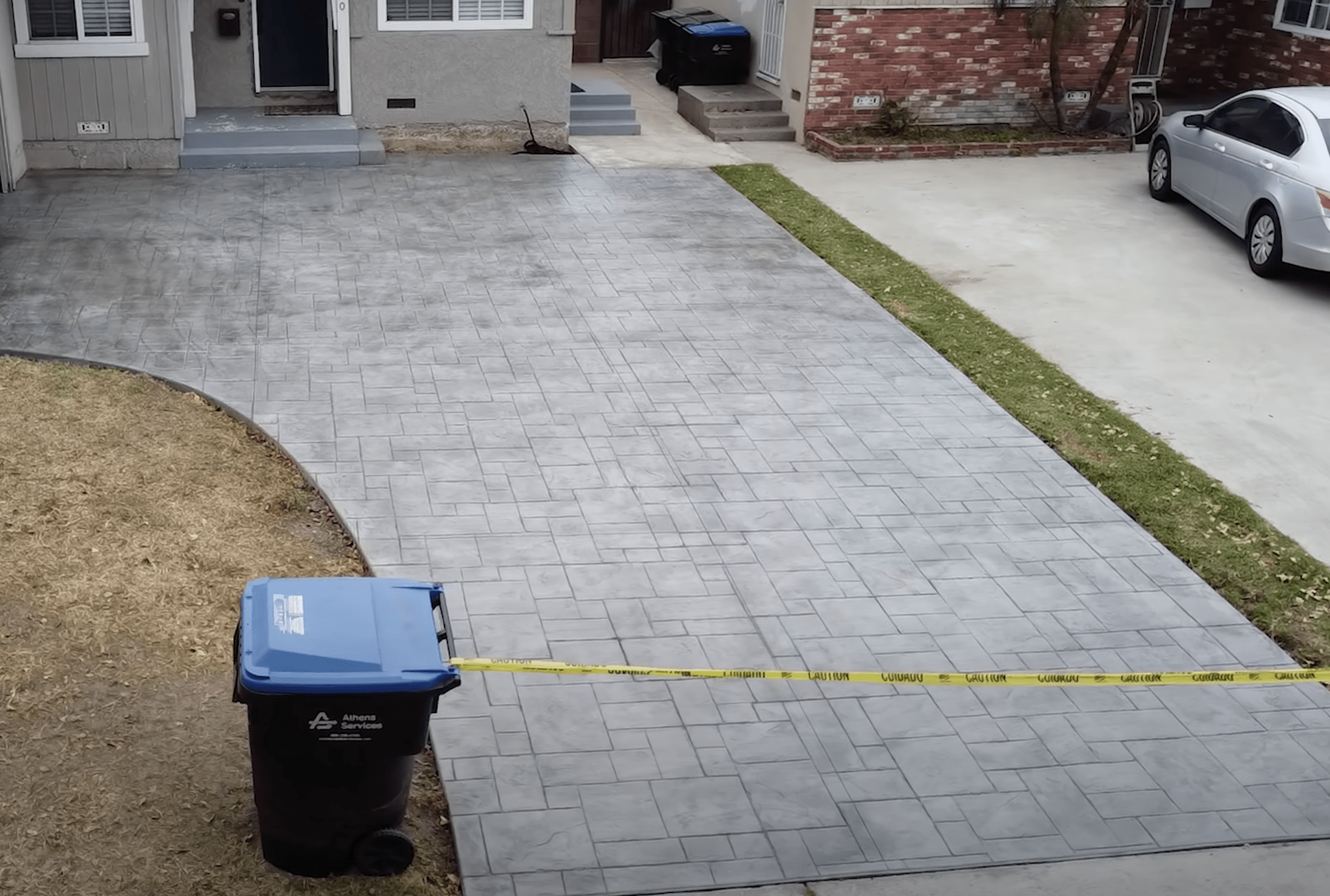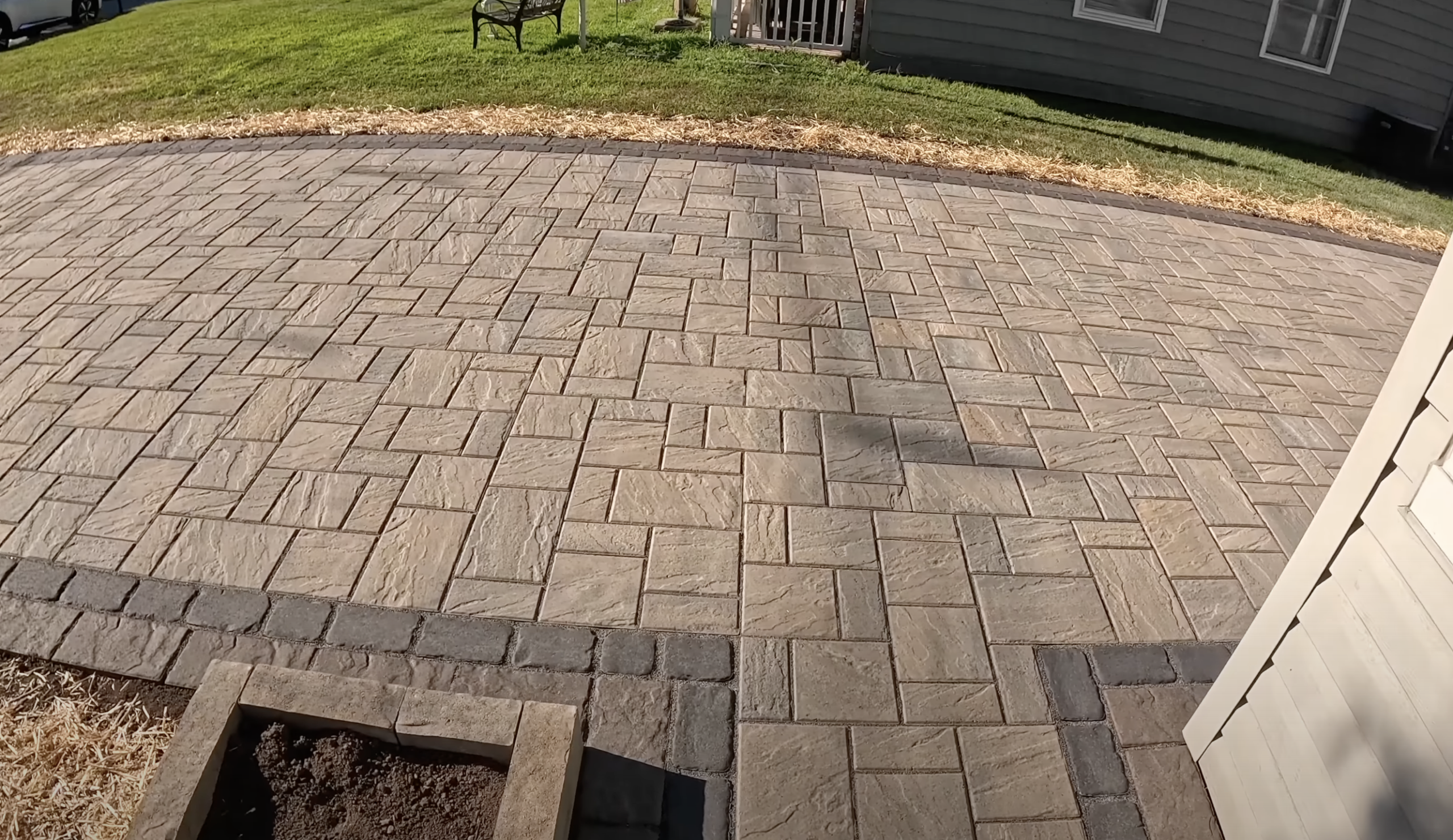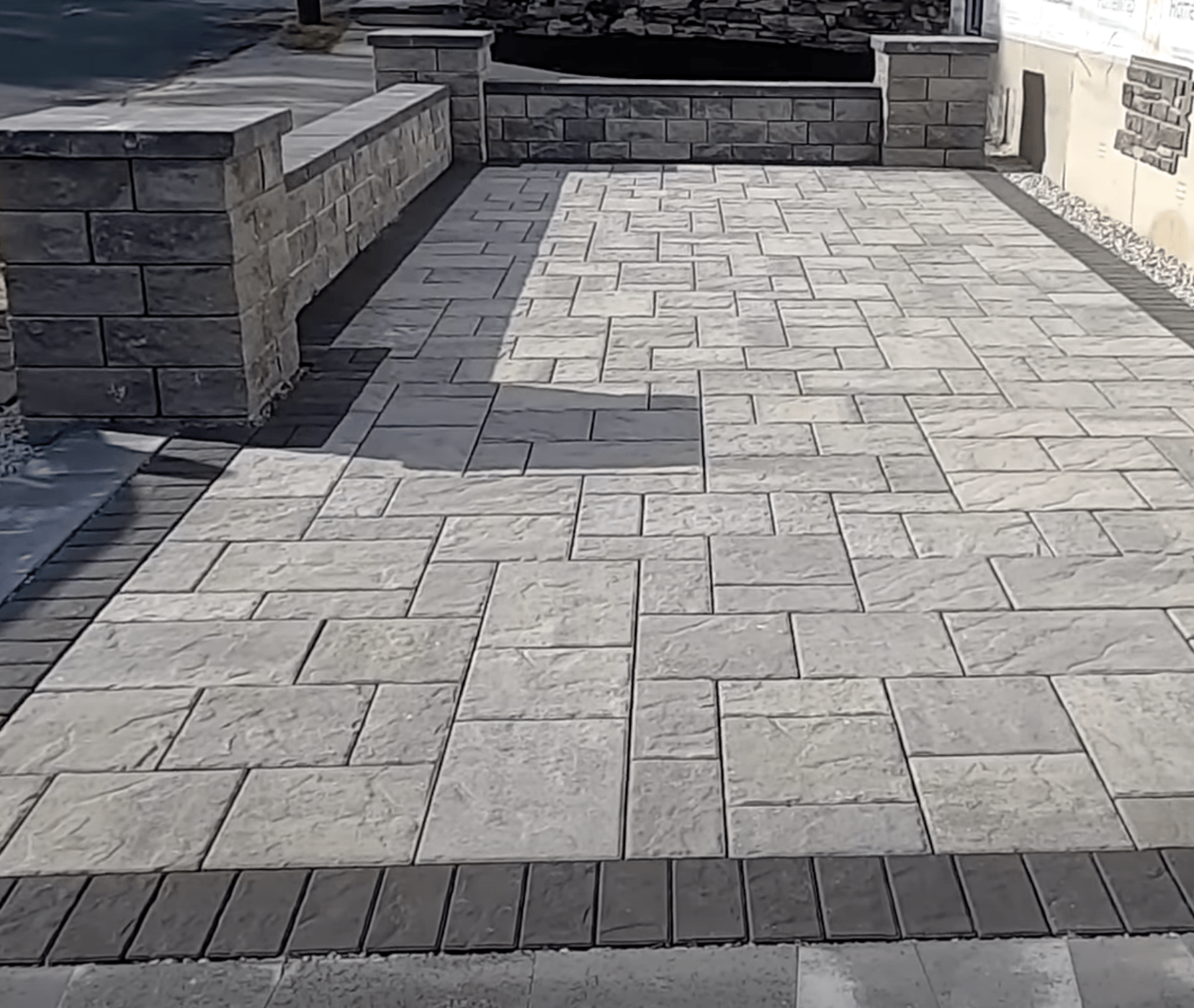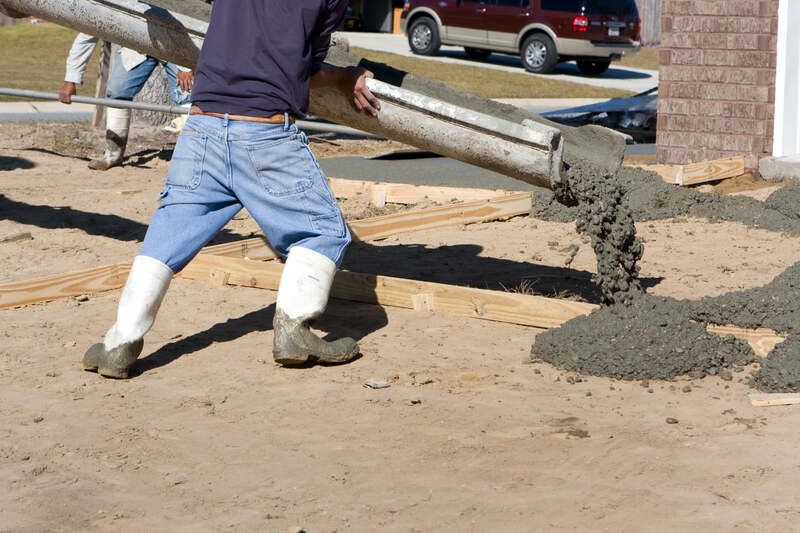
A warehouse floor that isn’t flat costs you money every day it stays that way. Forklifts bounce. Racking systems wobble. Product falls off shelves. Pallets won’t stack straight. AJ Concrete Contractor pours interior commercial concrete floors across Clearwater for warehouses, shops, retail spaces, and industrial buildings. Our crew understands flatness tolerances, joint layout, surface hardening, and moisture control – the stuff that separates a functional commercial floor from one that fights you.
Sounds obvious but you’d be amazed how many contractors treat them the same way. Same thickness, same finish, same cure method, same joint spacing. Then the building owner moves in and the forklift chatters across every joint, the floor dusts under traffic, and there are puddles in three spots where the grade dipped during the pour.
Interior commercial concrete has its own set of rules. Flatness tolerances are measured in fractions of an inch across 10-foot spans. Joint spacing has to account for rack leg positions so you’re not placing a 5,000-pound loaded rack directly on top of a joint. Surface treatments like densifiers and hardeners are applied post-cure to stop dusting and increase wear resistance. Moisture vapor transmission rates matter because whatever flooring or coating goes on top will delaminate if the slab is too wet.
None of that applies to a driveway or a patio. Different animal entirely.
Here’s where commercial floors get technical.
Floor flatness is measured using two metrics – FF and FL. FF measures how flat the surface is across small distances. FL measures how level it is across longer spans. Higher numbers mean flatter and more level. A standard warehouse floor might spec FF25/FL20. A high-tolerance distribution center with narrow-aisle turret trucks might require FF50/FL30 or higher.
Why does this matter? A forklift traveling 15 mph across a floor with poor FF numbers is essentially hitting speed bumps every few feet. Product shifts on the forks. Drivers fatigue faster. Components wear out sooner. On a very-narrow-aisle system where the turret head operates 30 feet up, even a small variation in floor levelness can put the forks a full inch off target at height. That’s a missed pick or a dropped pallet.
We check FF/FL numbers with a floor profiler after the pour. If the spec calls for FF35, we verify it and document it. You get a report showing exactly what numbers your floor hit. No guessing.
Standard commercial floors go in at 5 to 6 inches for light-duty retail and office spaces. Warehouses and industrial buildings bump to 6 to 8 inches depending on the loading.
Reinforcement strategy depends on how the floor is going to be used. For warehouse floors with heavy rack loads, we use rebar on a grid – #4 bars at 12 to 18-inch centers both directions, supported on chairs at the right elevation within the slab. The rebar handles flexural stress from point loads like rack legs and forklift wheels.
Some engineers spec post-tensioned floors for larger commercial buildings. Steel tendons run through the slab and get tensioned after the concrete cures, putting the entire floor into compression. Eliminates most cracking and allows longer joint-free spans. We’ve done post-tension work on commercial projects in the Clearwater area and it’s an excellent system for big box retail and distribution facilities, though it costs more than conventional reinforcement.
Fiber reinforcement supplements either approach. Synthetic or steel fibers mixed into the concrete at the batch plant. They help with shrinkage cracking during cure and add impact resistance to the finished surface. We use fiber as a supplement to rebar, not a replacement. Contractors who sell fiber-only floors as equivalent to rebar-reinforced floors are cutting a corner that shows up later.
Joints control cracking. On a commercial floor, they also affect equipment operation and rack placement. Getting the layout wrong creates daily operational headaches that last the life of the building.
Standard joint spacing follows the slab thickness multiplied by 2 to 3 in feet. A 6-inch slab gets joints every 12 to 18 feet. But here’s the thing – those joints can’t land wherever the math says if it conflicts with the rack layout. A joint running directly under a rack upright means the rack is bridging two separate slab panels that can move independently. Over time, one side settles slightly more than the other, the rack leans, and now you’ve got a structural problem with your storage system.
We coordinate joint layout with the racking plan before the pour. Joints go in the aisles between rack rows, not under them. If the building hasn’t finalized its rack layout yet – which happens more often than it should – we use a conservative joint grid that gives the most flexibility for future rack placement.
Joints get filled after the concrete cures. Semi-rigid polyurea or epoxy filler protects the joint edges from forklift wheel impact and prevents debris from packing into the gap. Unfilled joints deteriorate fast in a warehouse environment. The wheels chip the edges, the joint widens, and within a year you’ve got a rough ride across every joint line on the floor.
Raw concrete dusts. Fine particles on the surface wear loose under foot traffic and equipment wheels, creating a layer of gritty powder that settles on everything in the building. Product, shelving, equipment, HVAC filters – all of it collects concrete dust.
Densifiers solve this. Liquid lithium or sodium silicate applied to the cured floor surface. The chemical penetrates the concrete pores and reacts to form a hard crystalline structure that binds the surface particles together. Dusting stops. The surface becomes harder, more abrasive-resistant, and easier to clean.
For higher-performance floors – food processing, pharmaceutical storage, cleanroom-adjacent spaces – we apply a topical sealer or epoxy coating over the densified surface. Adds chemical resistance, makes the floor essentially non-porous, and allows for color coding of work zones and traffic lanes.
One thing we always mention to building owners: apply the densifier at the right time. Too early and it interferes with curing. Too late and the surface has already started dusting and the damage is harder to reverse. We time the application based on cure conditions and moisture readings, not a calendar date.
This one catches a lot of building owners off guard. They pour a floor, wait 28 days, install VCT tile or an epoxy coating on top, and six months later the coating is bubbling and peeling off. Tile adhesive is failing. Mysterious white deposits are forming underneath.
That’s moisture vapor. Every concrete slab emits water vapor as it cures, and some continue emitting long after the 28-day mark depending on slab thickness, ambient humidity, and whether a vapor barrier was installed underneath. In Clearwater’s humid climate, elevated moisture vapor emission is especially common because the ambient conditions slow the drying process.
We test moisture vapor emission rates using calcium chloride tests or relative humidity probes before any coating or flooring system goes on. If the MVER is above the threshold for the intended flooring product – and it often is on slabs poured in Florida – we either extend the drying time or apply a moisture mitigation primer that acts as a secondary barrier between the concrete and the finish floor.
Skipping this test is the single most common reason commercial floor coatings fail in our area. Not bad coating. Not bad concrete. Bad moisture management.
Warehouses are the bread and butter. Distribution centers, 3PL facilities, contractor storage buildings – anywhere forklifts run and racks stand. High flatness specs, heavy reinforcement, hardened surfaces.
Retail spaces need something different. Lighter loads but the floor is visible to customers, so aesthetics matter more. Polished concrete has gotten popular in Clearwater retail – grind the surface, densify it, polish it to a shine. No coating, no tile, no carpet. Just the concrete itself looking like a million bucks at a fraction of the cost.
Auto shops and service bays take chemical exposure that other floors don’t. Oil, transmission fluid, brake cleaner, coolant. The floor needs to resist all of that without pitting or staining. We pour a standard slab and coat it with a chemical-resistant epoxy system that handles the abuse.
Restaurant and commercial kitchen floors have their own requirements. Health code mandates a sealed, non-porous surface with proper slope toward floor drains. We integrate drain placement into the slab design and pitch the entire floor toward those drains at 1/8 to 1/4 inch per foot. Tighter slope tolerance than most exterior work.
Brewery and production facility floors are similar to restaurants but with even more aggressive chemical exposure from cleaning agents and fermentation acids. Urethane or methyl methacrylate coatings handle those conditions better than standard epoxy.
Existing floor not performing? Cracks across the surface, joint edges chipping, dusting that won’t stop no matter how much you sweep? Depending on the severity, repair might save the floor without a full tear-out.
Crack injection with epoxy restores structural integrity on non-moving cracks. The epoxy bonds both sides together and brings the flexural strength back close to original. Moving cracks – ones that open and close with temperature changes – get routed and filled with a semi-rigid material that flexes with the joint instead of fighting it.
Surface grinding fixes minor flatness issues and prepares the floor for a new coating. A floor that was poured sloppy but is structurally sound can be ground flat, densified, and coated to bring it up to a functional standard without demolishing and repouring.
Full overlay is the other option. A thin bonded cementitious topping – usually 3/8 to 3/4 inch thick – goes over the existing floor and gets finished to the flatness spec the original pour missed. Works well when the subfloor is structurally fine but the surface is too rough, too uneven, or too damaged to rescue with grinding alone.
Commercial flooring demands a crew that understands tolerances, timing, and surface science in ways that residential work never requires. Our team has poured warehouse floors in industrial buildings off Ulmerton Road, retail spaces near Clearwater Mall, shop floors for marine service operations along the waterfront, and restaurant kitchen slabs for properties on Gulf-to-Bay.
AJ Concrete Contractor handles commercial floor installation, repair, and resurfacing across Clearwater, Largo, Dunedin, St. Petersburg, Tampa, and surrounding Pinellas County communities. We spec the floor for your operation, pour it to tolerance, and finish it with the right surface system for your environment. Call (727) 758-3748 and tell us what the building needs.
FF/FL numbers checked with a floor profiler and documented. You get data, not a promise.
Layout coordinated with your rack plan so joints land in aisles, not under uprights.
Lithium densifier applied at the correct cure stage. No dusting, harder surface, easier maintenance.
MVER testing before any coating or flooring goes on. Prevents delamination failures that cost thousands to fix.
Warehouse, retail, restaurant, shop, industrial – whatever the space, AJ Concrete Contractor pours commercial floors across Clearwater built to the flatness, strength, and surface specs your operation demands. Call for a site visit.