So you want a court in your backyard. Basketball, pickleball, shuffleboard – doesn’t matter which one, it all starts with concrete. AJ Concrete Contractor is a licensed Clearwater concrete company that’s been building sport court foundations across Pinellas County for years. Flat, crack-free, properly drained surfaces that play right and last long. That’s the job.
Here’s what kills most backyard courts around here. Water.
Clearwater gets hammered with rain from June through October. Your court surface has to move that water off fast or you’re standing in puddles every time you want to shoot hoops after a storm. And it’s not just about sloping the slab – which yes, we do, about 1% grade from one side to the other. The perimeter has to be graded too so runoff doesn’t pool against the edges and erode the base underneath.
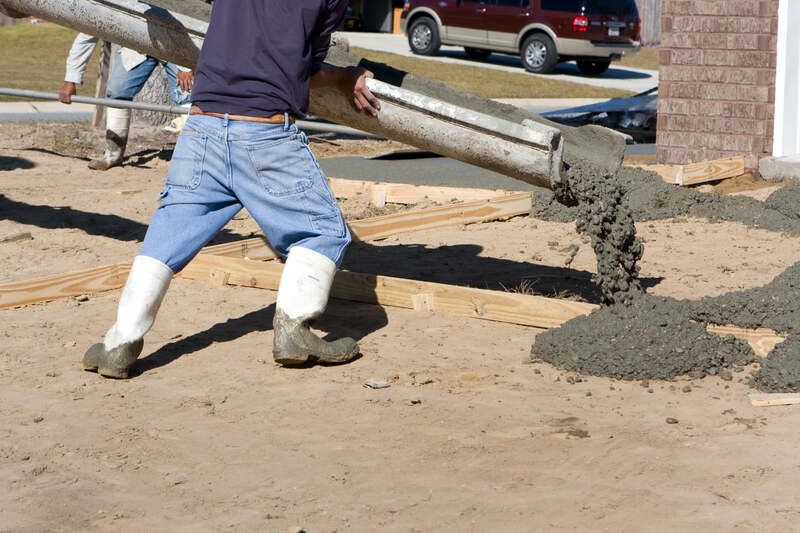
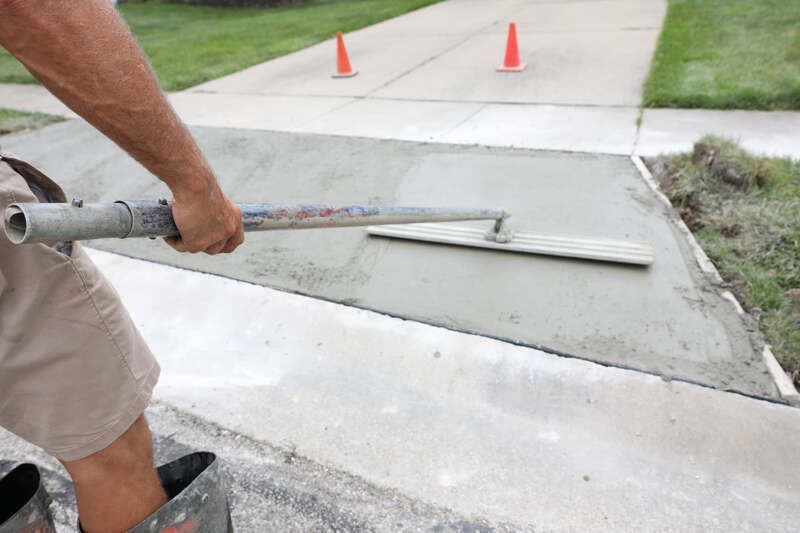
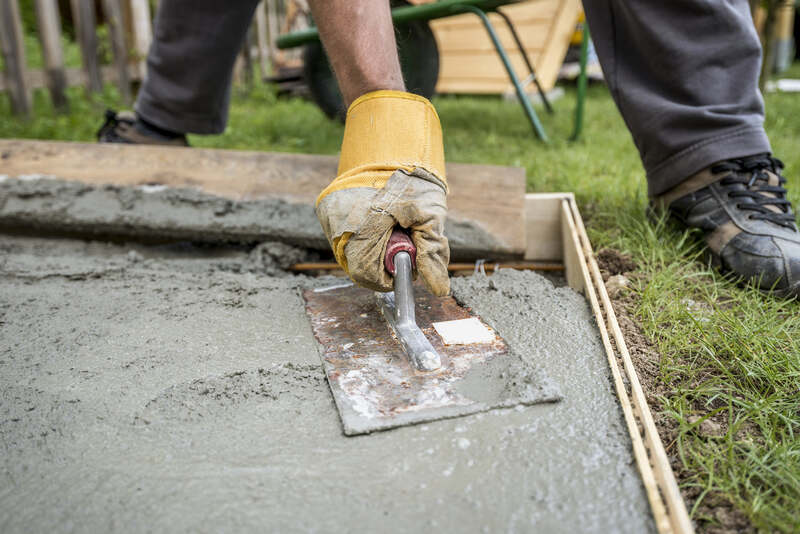
Getting the surface dead flat is the other half. A basketball bounces weird on an uneven slab. A pickleball rolls to one corner instead of sitting still. We laser-screed our sport court pours, which means a spinning beam guided by a laser reference levels the wet concrete to within 1/8 inch across the full surface. Manual screeding can’t hit that tolerance consistently. The laser can.
Depends on the sport. And your yard.
Half-court basketball is roughly 30 by 50 feet. That’s the sweet spot for residential – big enough for a real game, small enough to fit most Clearwater lots without eating the entire backyard. Full court runs 50 by 94 and honestly, unless you’re sitting on a half-acre or more, it’s not going to fit.
Pickleball is smaller. The court itself is 20 by 44 feet, but you want at least 10 feet of clearance on each end and 7 feet on the sides for safe play. So your pad needs to be roughly 34 by 64 to do it right.
Shuffleboard is narrow – 6 by 52 feet for a regulation court. Fits along a fence line or down the side of a property pretty easily.
Multi-sport courts are popular too. One slab, multiple line sets painted on top. Pickleball and basketball on the same pad with different color lines for each sport. Saves space, saves money, and you get more use out of the concrete.
Bring us your yard dimensions and we’ll figure out what fits. Sometimes it takes some creativity with placement and orientation to make it work, but we’ve squeezed courts into some surprisingly tight Clearwater lots.
Nobody sees it once the surface coating goes on. But the slab underneath is what makes or breaks the whole thing.
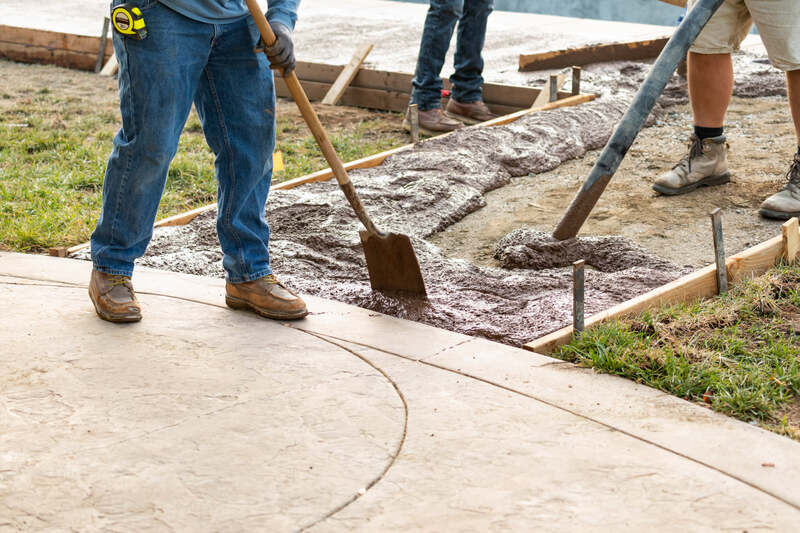
Standard sport court pours go in at 4 to 5 inches thick with wire mesh or rebar reinforcement. Thicker if the soil is especially loose or the court is going to see heavy use. Base material is compacted crushed stone – we don’t pour on bare sand no matter how packed it looks. Sand migrates. Stone doesn’t.
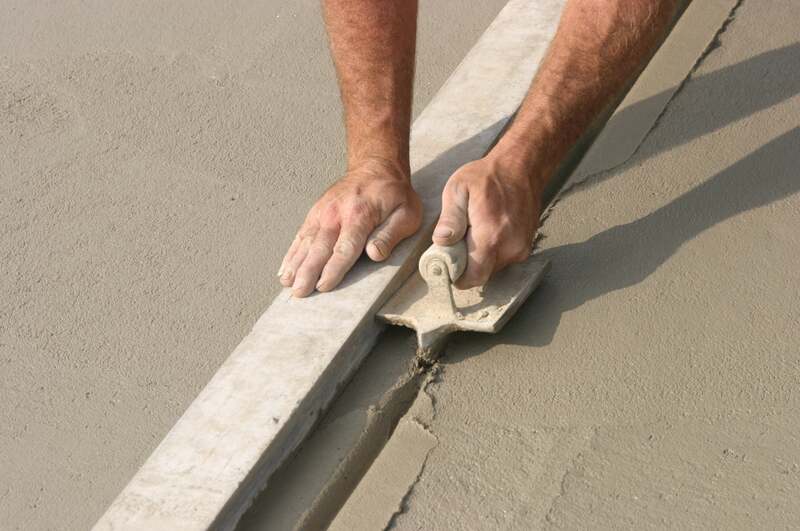
Control joints get cut in a grid pattern to manage shrinkage cracking. Joint placement on a sport court matters more than on a regular slab because surface cracks affect ball bounce and coating adhesion. We space joints carefully and cut them deep enough that if the concrete is going to crack, it cracks hidden inside the joint rather than across the playing surface.
Curing takes a full week minimum. Longer is better. Rushing to coat the surface before the concrete has fully cured leads to coating delamination down the road – the moisture trapped in the slab pushes the coating right off the surface. We’ve repaired courts where that happened because someone got impatient. Not fun. Not cheap.
Raw concrete is playable but it’s rough on shoes, rough on balls, rough on knees if you fall. Plus it gets screaming hot in Clearwater’s afternoon sun. A surface coating solves all of that.
Acrylic sport court coatings are what most residential courts get. They go on in multiple layers – a base texture coat, a fill coat, and then the color coat with game lines painted on top. The texture can be adjusted. More sand in the mix gives you more grip, which is better for basketball. Less sand and a smoother finish works for pickleball and shuffleboard where you want the ball or puck to glide.
Color options are wide open. Standard green and blue are the most common. Red and gray look sharp too. Some people go with team colors or contrasting zones for different sports on a multi-use court. The coatings are UV-stable, so they hold their color in Florida sun better than house paint or generic floor coatings would.
We don’t apply the coatings ourselves – we partner with a local sport court coating company that specializes in it. Our job is giving them a slab that’s perfectly flat, fully cured, clean, and ready to coat. Their job is making it look and play like a real court. The partnership works because each crew sticks to what they know best.
Lot size is the obvious factor but it’s not the only one.
Setback requirements matter. Clearwater has rules about how close structures can be to property lines, and a large concrete slab sometimes falls under those regulations depending on the size and location. We check this during the estimate and flag any permit requirements before work starts.
Trees are another consideration. That beautiful live oak you love? Its roots are going to be a problem if the court goes within 15 feet of the trunk. Roots grow toward moisture and a large slab changes how water moves through the soil. Over time, roots push up from underneath and crack the concrete. We’ve seen it happen on regular patios – on a sport court where flatness is everything, even a quarter inch of lift ruins the playing surface.
Neighbors deserve a mention too. A basketball hitting a backboard at 9 PM makes noise. Pickleball paddles make noise. If your lot puts the court 10 feet from a neighbor’s bedroom window, you might want to rethink placement. Not a concrete issue exactly, but we bring it up during planning because it’s the kind of thing that causes problems after the fact.
Already touched on this above but it deserves its own section because it’s that important.
A 30×50 half-court slab is 1,500 square feet of impervious surface. During a heavy Clearwater thunderstorm – and we get them constantly from June to September – that slab is collecting hundreds of gallons of water in minutes. Where does it go?
If the answer is “toward the house” then you’ve got a flooding risk. If it’s “toward the neighbor’s yard” then you’ve got a relationship problem and possibly a code violation.
We grade the slab to shed water to a designated low side, then grade the surrounding ground to channel that runoff toward a swale, a storm drain, or a permeable area of the yard where it can soak in. On tighter lots, we sometimes install a strip drain along the low edge of the court – a narrow trench drain with a grate that catches sheet flow and pipes it away underground.
Getting the drainage wrong on a sport court creates problems that are expensive to fix after the fact. The slab is poured. The coating is on. You can’t re-grade the concrete. Has to be right the first time, and our crew has done enough of these in Clearwater to know exactly how to set it up.
Two things that aren’t concrete but affect how we pour.
If you want LED lights around your court for night play, the pole bases need to be set before or during the concrete pour. We can embed anchor bolts or J-bolt clusters into the slab edge or pour separate footing pads for freestanding poles. Either way, those locations get laid out in advance so they’re in the right spot and at the right depth.
Fencing is similar. Chain link or vinyl fence posts around a sport court need footings. If the fence line runs right along the slab edge, we can thicken the slab perimeter and set post sleeves directly into the concrete. Cleaner look, no separate post holes to dig, and the posts are rock solid because they’re anchored in the same structure as the court. Just has to be planned before pour day, not decided afterward.
Building a sport court isn’t the same as pouring a patio. The tolerances are tighter. The drainage is more critical. The surface prep for coating has to be cleaner. Not every concrete contractor understands those differences, and the ones who don’t figure it out the hard way at your expense.
AJ Concrete Contractor has poured sport courts for homeowners in Clearwater, Largo, Dunedin, Palm Harbor, and across Pinellas County. Basketball half-courts are our most common request, followed by pickleball and multi-sport combos. Each one gets the same treatment – laser-screeded, properly reinforced, graded for drainage, and cured fully before the coating crew comes in. Our process is dialed in and the results back it up.
Pricing varies a lot on these jobs. A basic 20×44 pickleball pad on a flat lot with easy access is a very different number than a 30×50 basketball court that needs excavation, tree root removal, and a drainage system.
We quote after a site visit because there are too many variables to give a useful number over the phone. Soil condition, existing grade, access for the concrete truck, proximity to utilities, demo of any existing surface – all of it changes the price. Coating is separate since a different company handles that, but we can give you a ballpark on the full package including their work.
What we can tell you is that a backyard sport court on a concrete slab costs significantly less than a prefab modular court system. Those snap-together plastic tile courts look cool in the brochures but they fade in UV, get slippery when wet, and the tiles pop loose in heat. Concrete with a proper acrylic coating outperforms them and costs less over the lifetime of the court. Not even close.
Basketball, pickleball, shuffleboard, multi-sport – whatever you’re playing, the foundation is concrete and AJ Concrete Contractor knows how to pour it right for Clearwater’s soil and weather. Level surface, smart drainage, built to last. Call us and we’ll come measure your yard.