Walk out to your pool barefoot in July. If the deck burns your feet before you reach the water, something went wrong with the surface. AJ Concrete Contractor pours and resurfaces pool decks across Clearwater with cool-texture, slip-resistant finishes that feel comfortable even when the sun has been beating down all afternoon. Licensed, insured, and experienced with hundreds of pool deck jobs around Pinellas County.
Treating a pool deck like a standard patio pour is a mistake we see all the time around Clearwater. Regular broom-finished concrete next to a pool gets dangerously slick when wet. It absorbs heat and burns bare feet. Chlorinated splash water eats at the surface over time. And if the grading is off, pool overflow and rainwater run backward into the pool instead of away from it – dragging dirt, mulch, and debris right into your filter system.
Pool deck concrete has to do more. Handle constant water exposure. Stay cool in direct Florida sun. Provide grip when every surface around it is soaking wet. Drain away from the pool edge. And still look good enough that you actually enjoy sitting out there. Most standard concrete fails at least two of those within the first year.
“Cool deck” gets thrown around a lot. It’s become one of those generic terms like Kleenex or Band-Aid. Originally it referred to a specific brand – Mortex Kool Deck – but now people use it for any textured pool deck overlay that reflects heat instead of absorbing it.
The finish we install most often is a knockdown texture, sometimes called a spray deck or lace finish. Thin acrylic overlay applied over the concrete surface, then flattened slightly with a trowel to create an irregular, organic texture. It does three things at once – stays significantly cooler than plain concrete, provides traction when wet, and hides minor surface imperfections in the slab underneath.
Color matters here. Dark surfaces absorb more heat regardless of the texture. Lighter shades – cream, sandstone, light gray, desert tan – stay noticeably cooler underfoot. We steer every Clearwater pool deck client toward lighter color choices for that reason. You might love the look of dark charcoal next to turquoise water, but your feet won’t love it in August.
Ground prep around a pool is tricky because the pool shell is already in the ground. You can’t just drive equipment everywhere. Excavation has to be careful – no banging into plumbing lines, no cracking the bond beam, no disturbing the backfill around the pool walls.
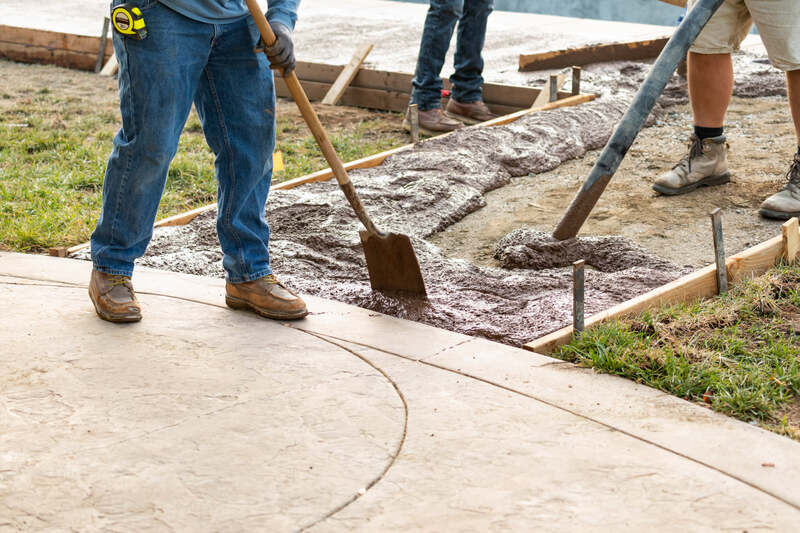
After excavation, base material goes down and gets compacted. Then forms. Pool decks almost always have curves, radius corners, and irregular shapes that follow the pool outline. Forming those curves takes time and patience – flexible form boards bent to shape, staked every 12 to 18 inches, checked for grade. Rush this part and you get wobbly edges that look amateur.
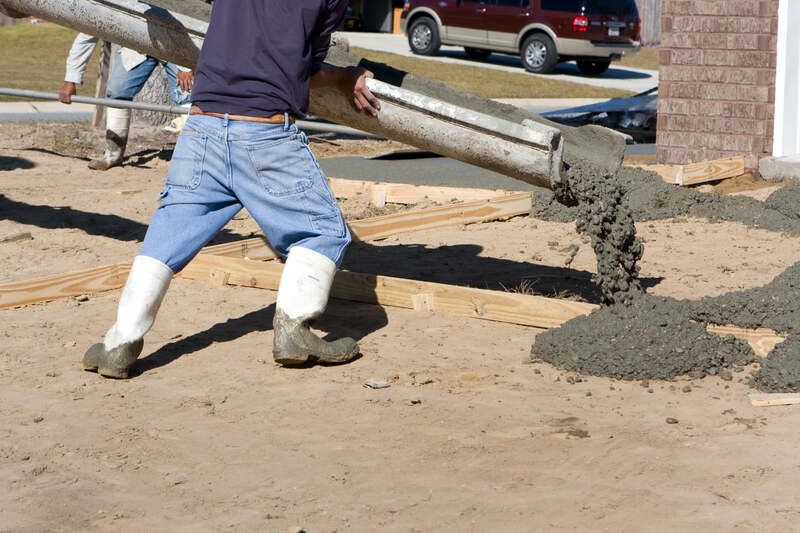
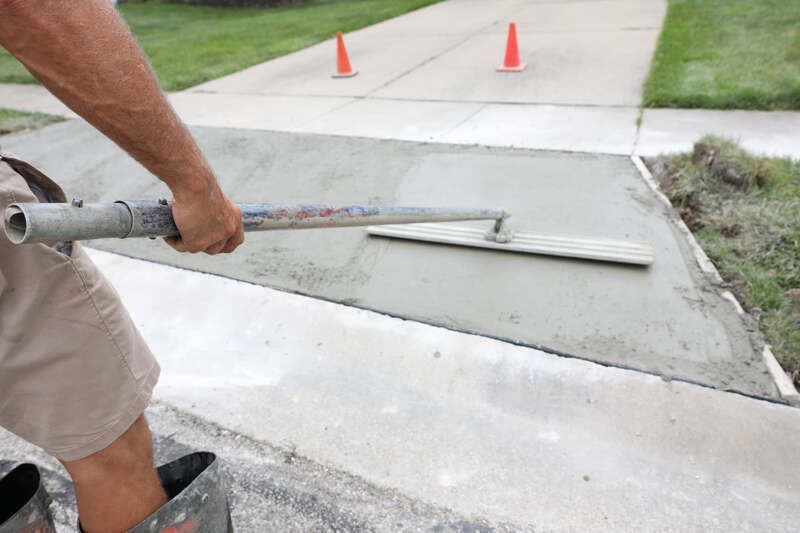
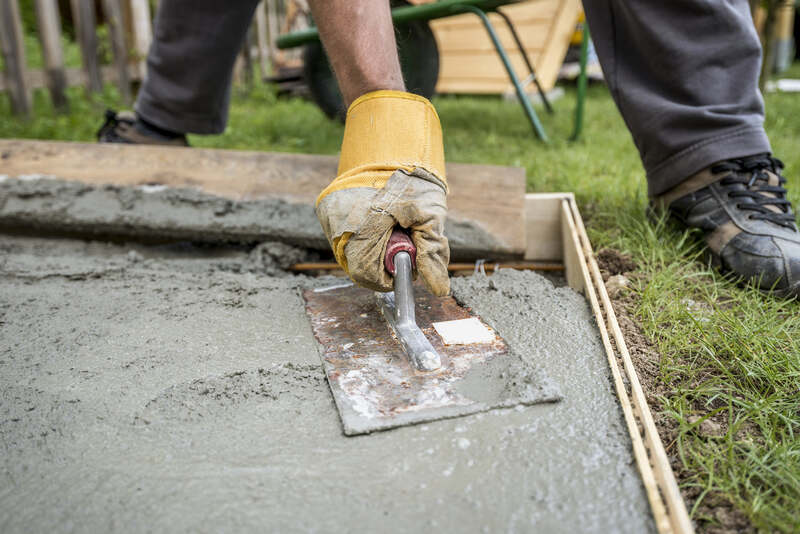
Pour day moves fast. The concrete truck backs in, we direct the chute, and our crew screeds and floats the surface while it’s workable. Expansion joints go in where the deck meets the pool coping – critical detail because the deck and the pool shell move independently. Without that gap, the deck will crack against the coping as temperatures change. After finishing, the overlay or texture goes on within a few weeks once the slab has cured.
Brand new pool decks are maybe 30% of our pool work. The other 70% is resurfacing.
Clearwater homes built in the 80s and 90s have pool decks that are structurally fine but look terrible. The original Kool Deck is peeling. The color has faded to a chalky nothing. Patches from old repairs are visible everywhere. Cracks spider-web across the surface. The deck still holds weight, it’s still level, but it looks like it belongs on an abandoned property.
Resurfacing saves those decks. We prep the existing surface – clean it, acid etch or grind it for adhesion, fill any cracks, and fix low spots. Then the new overlay goes on top. Knockdown texture, stamped overlay, or smooth troweled acrylic depending on what you want. New color, new texture, new feel underfoot. Takes a couple days and costs a fraction of a full tear-out and repour.
One catch. The existing slab has to be sound. If panels have sunk, if there are structural cracks wider than a quarter inch, or if the base has washed out underneath, an overlay won’t fix that. It’ll just delaminate from a bad substrate. We check the slab condition before recommending resurfacing and we’ll tell you straight if it needs more than a new top coat.
Water on a pool deck flows in two directions: off the swimmers and out of the sky. Both need somewhere to go that isn’t back into the pool.
Code requires pool decks to slope away from the pool edge. Makes sense – you don’t want contaminated runoff carrying fertilizer, dirt, pet waste, or anything else back into the water your kids are swimming in. We pitch every deck section away from the coping at a minimum of 1/8 inch per foot. On larger decks, that grade builds up enough that we sometimes need a perimeter drain along the far edge to catch the runoff before it hits the lawn or the fence line.
Around screen enclosures – which is basically every pool in Clearwater – drainage gets more complicated. The enclosure columns sit on the deck surface and create barriers that trap water in certain spots. We plan drain paths around those columns during the forming stage. If needed, small channel drains get embedded in the concrete at low points so water can escape instead of sitting there growing algae between the column base and the deck surface.
People ask about this constantly so here’s the breakdown from someone who’s installed all three.
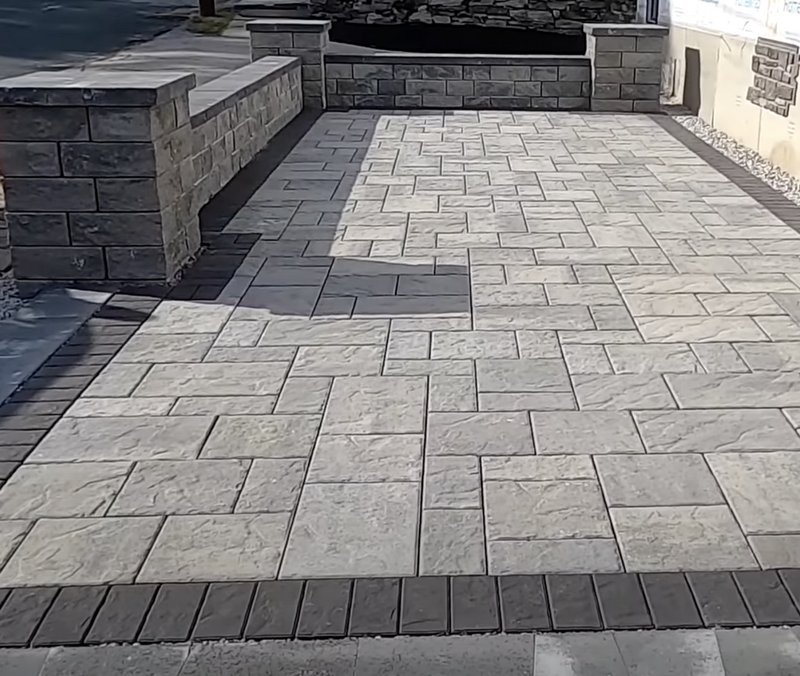
Travertine pavers look incredible next to a pool. Natural stone, earthy tones, stays cool, non-slip surface. Beautiful product. Also expensive. $20 to $35 per square foot installed depending on the grade. And the joints require maintenance – sand washes out, weeds come in, pavers settle individually. Over five years, travertine maintenance adds up fast.
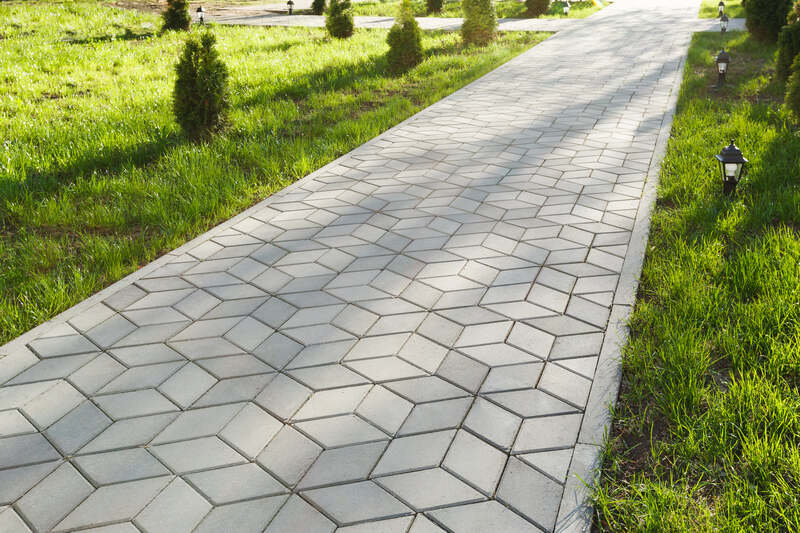
Standard concrete pavers are cheaper but they absorb heat badly. The darker colors especially. Walk across dark pavers next to a pool on an August afternoon in Clearwater and you’ll understand why people switch to concrete overlay afterward.
Poured concrete with a cool deck overlay is where most Clearwater pool owners land. It’s a single surface – no joints, no shifting, no sand to refill. Cool to the touch with the right texture. Slip-resistant. Easy to clean. And about $8 to $14 per square foot installed for the concrete and overlay together. The math favors it pretty heavily, and so does the long-term maintenance picture.
Cracks along the pool coping edge. Chipped corners where the deck meets the pool. Delaminated overlay peeling up in sheets. Faded, worn texture that’s lost its traction. These are the pool deck repair calls we get every week around Clearwater.
Small cracks get routed out, filled with flexible sealant, and textured over to blend with the surrounding surface. Delaminated sections get scraped, re-etched, and recoated. Faded or worn areas get a fresh overlay application. None of these repairs require tearing out the slab. The structural concrete stays.
Bigger problems – sinking sections, structural cracking, extensive base failure – sometimes do need a partial or full demo. But that’s rarer than most people expect. Eight out of ten pool deck repair calls we respond to in Clearwater end up being surface-level fixes that take a day or two and make the deck look new again.
Here’s a detail that matters a lot and gets overlooked constantly.
Your pool shell and your pool deck are two separate structures sitting in the same ground. They expand and contract at different rates. They settle differently. If the deck is poured tight against the pool coping with no gap, that differential movement puts stress on both surfaces. The deck cracks. The coping chips. Sometimes the bond beam on the pool itself gets damaged.
Expansion joint material – a compressible strip of foam or rubber – goes between the deck and the coping during the pour. Quarter inch to half inch wide usually. It gives both structures room to breathe without pressing against each other. After the overlay goes on, we seal that joint with a flexible caulk that matches the deck color. Looks clean, functions properly, and prevents the most common type of pool deck cracking there is.
We’ve repaired dozens of pool decks around Clearwater where this joint was either missing or filled with rigid grout that cracked immediately. Simple detail. Huge impact if it’s done wrong.
Pool deck work sits at the intersection of structural concrete and decorative finishing. Not every concrete contractor can do both well. The guys who pour great foundations don’t always have the touch for overlay textures. The decorative overlay guys don’t always know how to build a proper structural slab underneath.
Our crew handles both sides. Years of pool deck installation and resurfacing across Clearwater taught us how to build the slab right and make the surface look right – two different skill sets applied to the same project. Neighborhoods off Belleair Road, homes in Harbor Oaks, properties along the Intracoastal, older pool homes near Clearwater High – we’ve done pool deck work in all of those areas and the referrals from those jobs keep the phone ringing.
Rinse it after pool parties. Pressure wash it twice a year. Hit mildew spots with diluted bleach before they spread. Reseal or recoat the surface every three to four years depending on sun exposure and foot traffic. That’s genuinely all it takes.
Avoid dragging heavy furniture across the surface – metal chair legs scratch through the overlay coating. Use plastic glides or rubber feet on everything. Don’t let pool chemical spills sit. Acid-based chemicals especially will etch the surface finish if they’re not rinsed off quickly.
If the surface starts feeling smooth in high-traffic areas – like in front of the steps or around the ladder – that’s the texture wearing down and it’s time for a recoat. Don’t wait until someone slips. A fresh coat of textured overlay restores the grip and takes an afternoon.
New pool deck, resurface, or repair – AJ Concrete Contractor handles all of it across Clearwater. Cool-texture finishes, proper drainage, slip-resistant surfaces built for Florida pools. Call and we’ll come look at your deck.